23 September, 2026
Wednesday
FINTECH
The Mission-Critical Machine: Reimagining the POS with AI and Sovereignty
For most retail and small business owners, the Point of Sale (POS) terminal is something they only think about when it stops working. But after spending over six years developing and refining our POS product, HowToPay POS, at Confidia, I’ve realised a critical truth that many overlook: the POS machine is not just a checkout tool—it is the absolute heartbeat of your business.
When your POS fails, your business grinds to a halt. You can’t bill clients, you can’t accept payments, and you lose all real-time visibility into your inventory. Yet, for far too long, small businesses have neglected this vital organ. Many operate on systems that are years out of date, running software that was never built to handle the complex, modern needs of today’s retail environment.
This realization is what drove us to build a POS system that didn’t just process transactions, but actually empowered business owners while keeping them secure in an increasingly complex digital landscape.
The Offshore Cloud Risk: Why Data Sovereignty Matters in 2026
In 2026, where your business data lives is no longer just a technical detail—it is a major legal, financial, and operational risk.
We are currently witnessing a massive global realignment toward local data control, heavily catalyzed by pioneering regulatory frameworks in the European Union. What began as an EU-led push for digital sovereignty has quickly become a global baseline. This movement is only the beginning of a profound shift expected to accelerate rapidly over the next year, influencing how privacy laws are written and enforced worldwide.
Many off-the-shelf POS systems on the market store highly sensitive customer records, financial histories, and transaction logs on offshore servers. When a data breach occurs offshore, small and medium-sized businesses can find themselves exposed to devastating legal liabilities, administrative nightmares, and ruinous regulatory fines under modern privacy acts.
By building HowToPay POS to keep data sovereign and securely stored, we protect local businesses from these offshore liabilities. Data sovereignty isn’t a luxury anymore; it’s a critical shield for your business’s survival.
Payment Sovereignty: Reclaiming Your Margins from Global Card Schemes
Alongside data security, payment sovereignty has emerged as a defining battleground for retail margins.
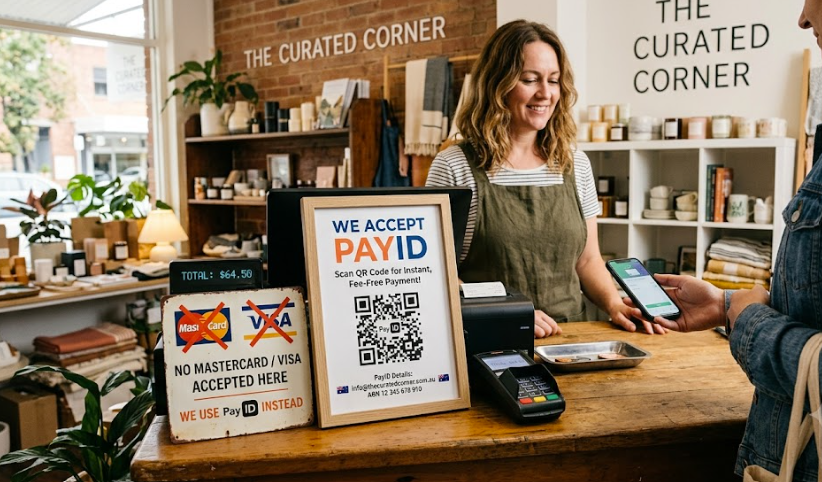
For decades, small businesses have been forced to surrender a percentage of every transaction to high interchange and processing fees imposed by international card schemes. But the tide is turning on a global scale. Inspired by aggressive moves in the EU to build independent payment infrastructures that challenge dominant overseas financial networks, payment sovereignty has become a major talking point in 2026. This structural disruption is expected to continue at an intense pace over the next twelve months as businesses fight to keep transaction capital within their borders.
Instead, they are adopting safer, cheaper domestic payment solutions, such as local QR code payments and real-time bank-to-bank transactions (utilising rails like Australia's PayTo system). These domestic payment methods route funds directly from a customer's account to yours instantly, wiping out high processing fees and keeping local capital within the local economy.
Unlocking the Data: The 2026 API Evolution
Historically, the wealth of data captured by a POS system has sat trapped inside a digital black box. Business owners had access to flat, retroactive reports, but they couldn't easily manipulate or connect that data to other tools to gain deeper, forward-looking insights.
Earlier this year, we set out to change that. We introduced our first API and custom connectivity features for HowToPay POS. Our goal was simple: allow clients to securely connect their systems to external tools, extract live data, and build a much deeper understanding of how their businesses operate day-to-day.
Almost immediately, we noticed a fascinating trend.
Our clients weren't just connecting their data to traditional spreadsheets or CRM platforms. Instead, their primary use case was connecting our live API directly into Artificial Intelligence.
Bringing AI Inside: Launching the POS AI Assistant (June 2026)
While watching our clients build external AI pipelines was exciting, I realized we could do something much more impactful. Why force business owners to build complex, external API bridges just to talk to their data? Why not put the AI directly inside the system where they already work?
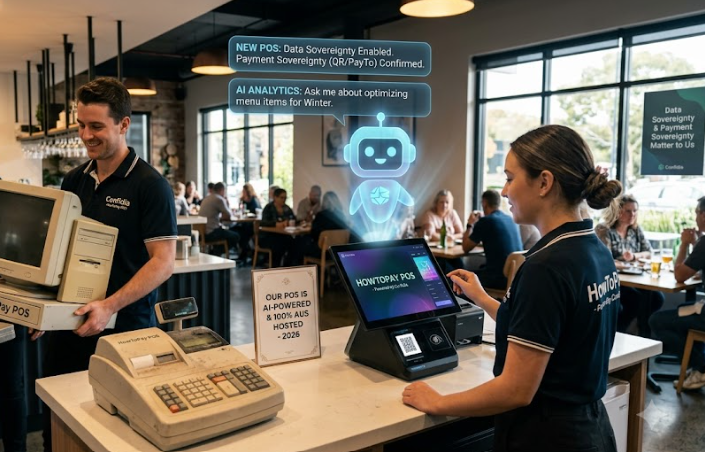
This month, we officially launched our integrated AI Chat Bot directly inside the HowToPay POS Admin panel.
This isn't just a generic chatbot or a basic reporting filter. It is a fully integrated, AI-driven business assistant that has direct, secure access to live store data. Instead of digging through endless tabs, running complicated queries, or exporting CSVs, store owners can now simply ask conversational questions and get instant, highly relevant answers:
-
"Which of my products are underperforming this season, and which should I stop reordering?"
-
"What is the difference in my sales patterns on rainy Tuesdays versus sunny ones?"
-
"How can I optimize my procurement costs based on my sales volume over the last quarter?"
By looking at historical trends, seasonal shifts, and procurement costs, the AI assistant helps business owners identify inventory that is simply sitting on shelves wasting money, allowing them to make proactive adjustments before purchasing their next batch of stock.
Faster, Smarter Business Decisions
The early feedback we have received since our June launch has been incredibly rewarding.
Our clients are telling us that they finally feel like they have the answers they need to make faster, more informed decisions. They are no longer relying on "gut feelings" to order stock or manage their margins; they are relying on real, lived data interpreted instantly by an assistant that understands their business.
Innovation is a constant cycle, and our clients' feedback is already driving the next wave of smart features for HowToPay POS. We are committed to ensuring that the most critical piece of equipment in your shop is also the smartest—and the most secure.
See more here: https://www.howtopay.com