22 October, 2026
Thursday
BLOG
The Deal Has Changed: 10 Reasons Digital Nomads and Expats Are Reconsidering Thailand in 2026
If you are planning a move to Thailand based on a social media post from 2023 or even early 2025, you need to pause. The "Land of Smiles" has long been the undisputed capital of the digital nomad and expat world, offering an intoxicating mix of cheap living, vibrant culture, and easy visas. But in 2026, the reality on the ground has radically shifted. The deal has changed, and many long-term expats, freelancers, and remote workers are quietly packing their bags.
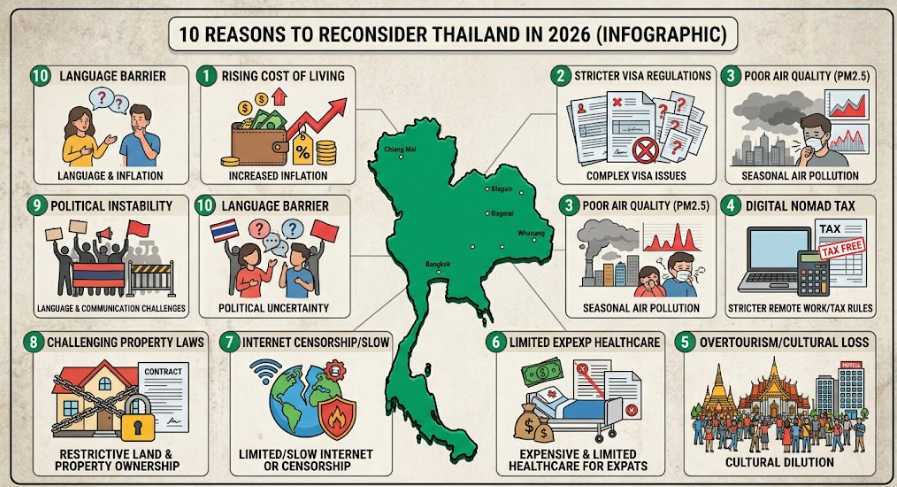
Here are the top 10 reasons why Thailand may no longer be the best choice for your next chapter.
-
An Active Border Conflict and Geopolitical Tension Do you truly want to be living in a country with an active military dispute? Over the last year, relations between Thailand and Cambodia have deteriorated into a severe border crisis over undemarcated territory and historical claims. The clashes in July and December 2025 involved artillery, airstrikes, and significant casualties, forcing hundreds of thousands to displace. Even with a fragile ceasefire in early 2026, the military posturing, troop deployments, and nationalist rhetoric have drastically changed the local environment.
-
The End of Tax-Free Foreign Income For decades, expats legally avoided Thai taxes on foreign income by waiting a calendar year before remitting it into the country. That loophole was slammed shut. As of 2024, if you spend 180 days in Thailand, you are a tax resident, and any foreign income brought into the country is subject to personal income tax rates as high as 35%. While a 2025 proposal introduced a temporary exemption window, the era of living tax-free on foreign earnings in Thailand is effectively over, hitting retirees and freelancers hard.
-
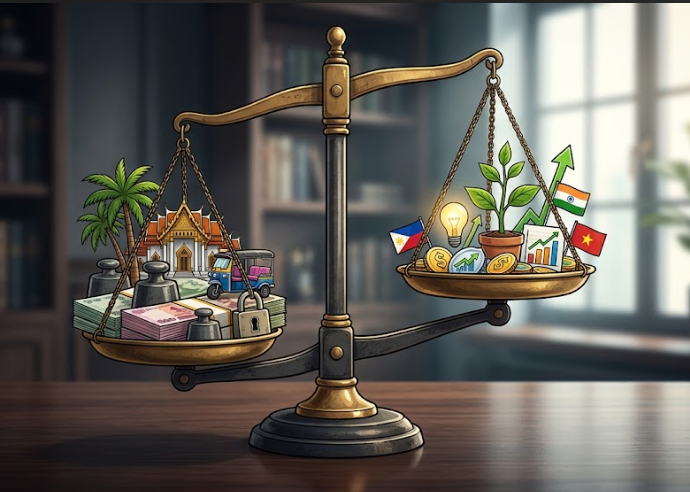
Fierce Regional Competition with Better Offers Thailand’s new Destination Thailand Visa (DTV) is attractive, but neighboring countries have capitalized on Thailand's tightening regulations by rolling out highly competitive alternatives. Malaysia’s DE Rantau Nomad Pass offers a straightforward, affordable path with low income thresholds, while Indonesia and the Philippines are aggressively courting remote workers with easier renewals, clearer tax exemptions, and lower costs of living.
-
The Skyrocketing Cost of Living The days of the $300 modern condo and $1 pad thai are fading into myth. Inflation, a strong baht, and a surge in foreign real estate investment have driven up property prices and everyday expenses. Many expats are finding that the financial leverage they once enjoyed in places like Bangkok, Phuket, and Chiang Mai has evaporated.
-
Hazardous Air Pollution (PM2.5) The annual "burning season" in Northern Thailand and Bangkok is no longer just a mild inconvenience; it is a severe public health crisis. For several months a year, cities like Chiang Mai frequently rank as the most polluted on Earth, with PM2.5 levels soaring to hazardous extremes. Expats are increasingly unwilling to sacrifice their lung health or flee the country for three months every year.
-
Domestic Political Instability The border conflict has acted as a catalyst for internal political friction. In early 2026, Prime Minister Anutin Charnvirakul dissolved parliament and called snap elections amidst coalition instability and declining public trust. The ongoing tension between civilian governance and military influence creates an underlying atmosphere of unpredictability that can affect visa policies and foreign investments overnight.
-
Overcrowding and Gentrification Thailand's most famous expat hubs are suffering from their own success. Phuket and Chiang Mai are heavily saturated, leading to strained infrastructure, terrible traffic, and a loss of the authentic cultural charm that drew foreigners there in the first place. For many, these areas now feel more like expensive, commercialized tourist traps than liveable communities.
-
Exhausting Bureaucracy and Scrutiny The day-to-day administration of living in Thailand has become notoriously tedious. From the strict enforcement of TM30 address reporting to increased scrutiny on visa extensions and banking compliance, the bureaucratic friction is wearing expats down. What used to be a simple process is now heavily regulated and heavily penalized for minor missteps.
-
Escalating Healthcare and Insurance Costs While Thai medical care remains excellent, it is no longer cheap. Private hospitals catering to foreigners have raised prices significantly, and mandatory health insurance requirements for certain long-term visas have priced many retirees on fixed pensions entirely out of the market.
-
The Vibe Shift Ultimately, the community dynamic has changed. Thailand has transitioned from a rugged, frontier-like destination for adventurous digital nomads into a highly regulated, corporatized hub. The social environment feels different than it did even 12 months ago, leaving many long-term residents feeling socially isolated and looking toward greener, less complicated pastures.
If you are considering a move to Southeast Asia in 2026, it pays to look beyond the algorithm. Thailand remains a beautiful country, but for the modern digital nomad, it is no longer the default choice.